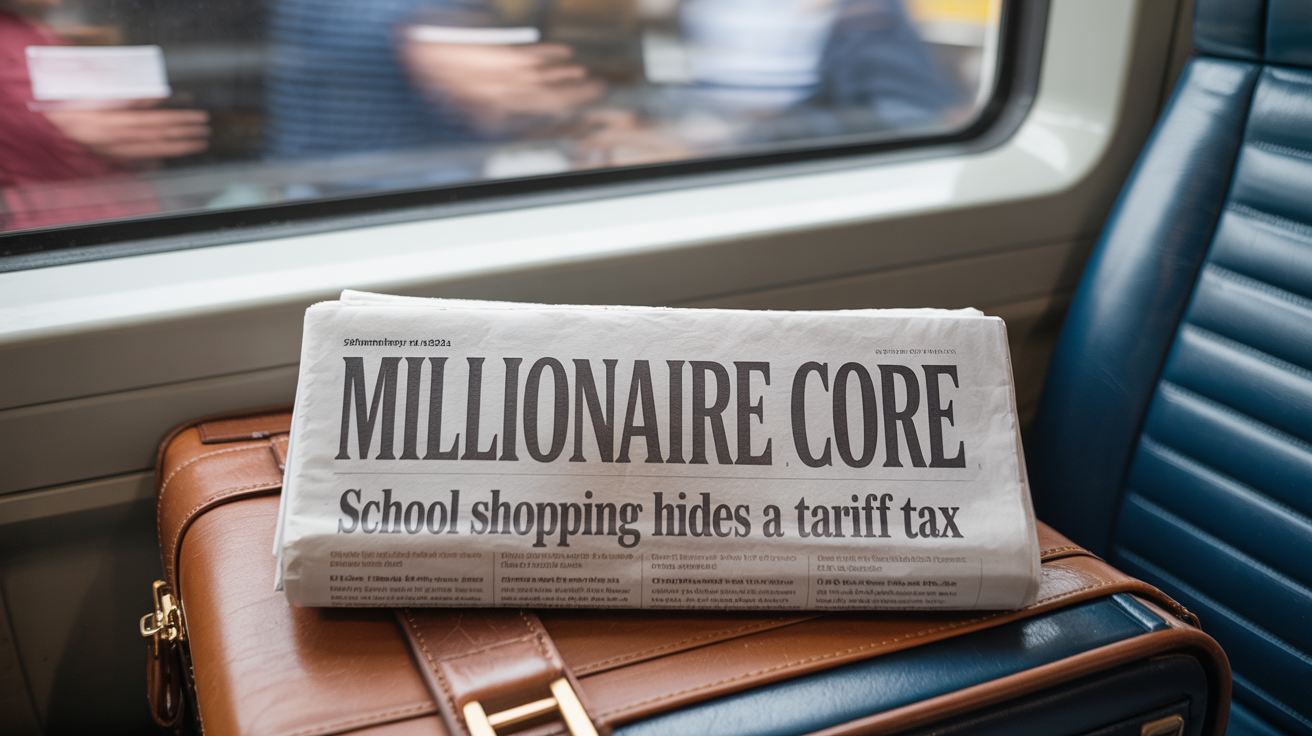
Families are spending close to $864 on average this back-to-school season, and buried inside that total is a cost most parents never see itemized. A basket of common school shopping staples, things like gym bags, sweatshirts, pencils, and calculators, now carries an estimated $147.60 in tariffs. That's not a separate line item on any receipt. It's just quietly baked into the price.
Where the Extra Cost Is Hiding
Tariff rates on many everyday school supply categories have risen substantially in the past couple of years, with some products seeing effective rates jump by more than 400%. Clothing and footwear brands have publicly acknowledged raising prices specifically because of tariff costs, with one company alone facing well over a hundred million dollars in tariff expenses this year. None of that shows up as a separate charge at checkout. It shows up as a higher sticker price that looks like normal inflation.
The Full Scope of What Families Are Paying
Electronics are running families about $293 per student this year. Shoes are averaging $174 per family, up nearly 3% from last year. School supplies alone have climbed from roughly $144 to $146. Add it all up across a full school year, and the total cost of educating one child, including everything beyond just shopping, is running close to $4,000, nearly 11% higher than last year.
Families Are Feeling It, Not Just Reading About It
Nearly four in five back-to-school shoppers expect to pay more this year, and closer to half of parents say they're planning to take on debt just to cover the cost of getting their kids ready for school. That's a meaningful shift from treating back-to-school as a routine seasonal expense to treating it as a financial stretch that requires borrowing.
Final Take
If your back-to-school total felt higher than it should this year, tariffs are a real, quantifiable part of that increase, not just a vague sense that "everything costs more now." Knowing that the extra cost is coming from trade policy rather than ordinary inflation doesn't lower the bill, but it does help explain why a basket of the same items you bought last year is costing meaningfully more this time around.
Written by Deniss Slinkins
Millionaire Core