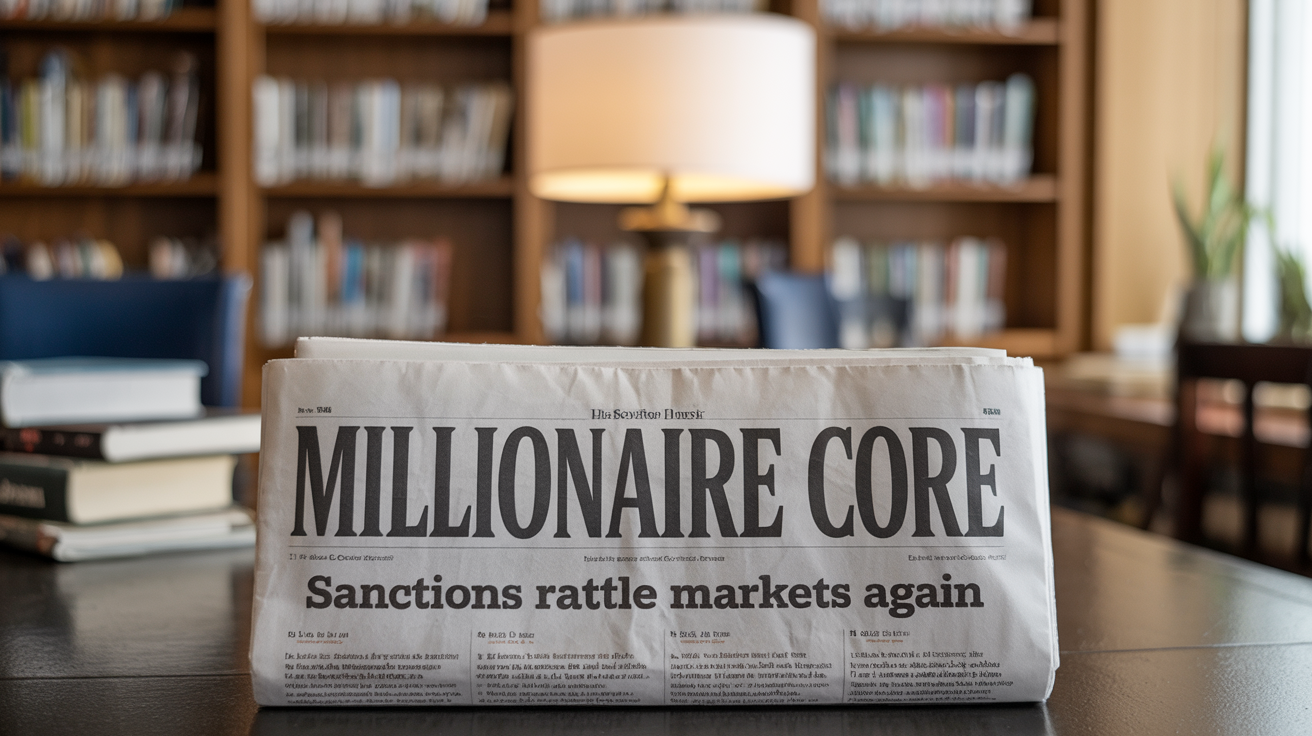
Just weeks after a ceasefire and partial Strait of Hormuz reopening had markets feeling optimistic, the Treasury announced a fresh round of expanded sanctions on Iran, and stocks reacted almost immediately. This is at least the third or fourth time this year that the same basic story, hope for de-escalation followed by a fresh complication, has played out in markets.
What Just Happened
The Treasury Secretary unveiled what officials are calling "Operation Economic Outcast," a coordinated push to tighten the financial squeeze on Iran further. Markets responded the way they typically do to renewed Iran-related friction, semiconductor and tech-heavy names led the decline, while more defensive sectors like consumer staples actually gained ground the same day, a classic pattern when investors get nervous about geopolitical risk without fully panicking.
A Pattern That Keeps Repeating
Earlier this year, a ceasefire eased tensions and oil prices dropped, only for accusations of violations to send prices climbing right back. Later, a deal to partially reopen the Strait of Hormuz brought another wave of relief, which again proved incomplete. New sanctions now mark another turn in the same cycle. Each episode has followed a similar arc: optimism, a market rally, a complication, and a partial reversal, without the underlying conflict ever fully resolving or fully escalating.
Why Markets Keep Getting Whipsawed by the Same Story
Investors have to price in geopolitical risk in real time, even when the underlying situation is genuinely uncertain and prone to reversing itself within weeks. That's part of why oil, gold, and risk-sensitive sectors like chips keep swinging on Iran-related headlines specifically, they're the assets most directly exposed to how this particular situation resolves, and markets have learned not to fully trust any single de-escalation signal after watching several of them unwind already this year.
Final Take
If this cycle feels familiar, that's because it is. Ceasefires, partial reopenings, and now expanded sanctions have all moved markets this year without producing a lasting resolution either way. The practical lesson for a household budget is the same one that's applied every time this story has resurfaced: treat any calm in oil and gas prices tied to Middle East diplomacy as provisional, not permanent, until the underlying situation actually stabilizes for more than a few weeks at a time.
Written by Deniss Slinkins
Millionaire Core