
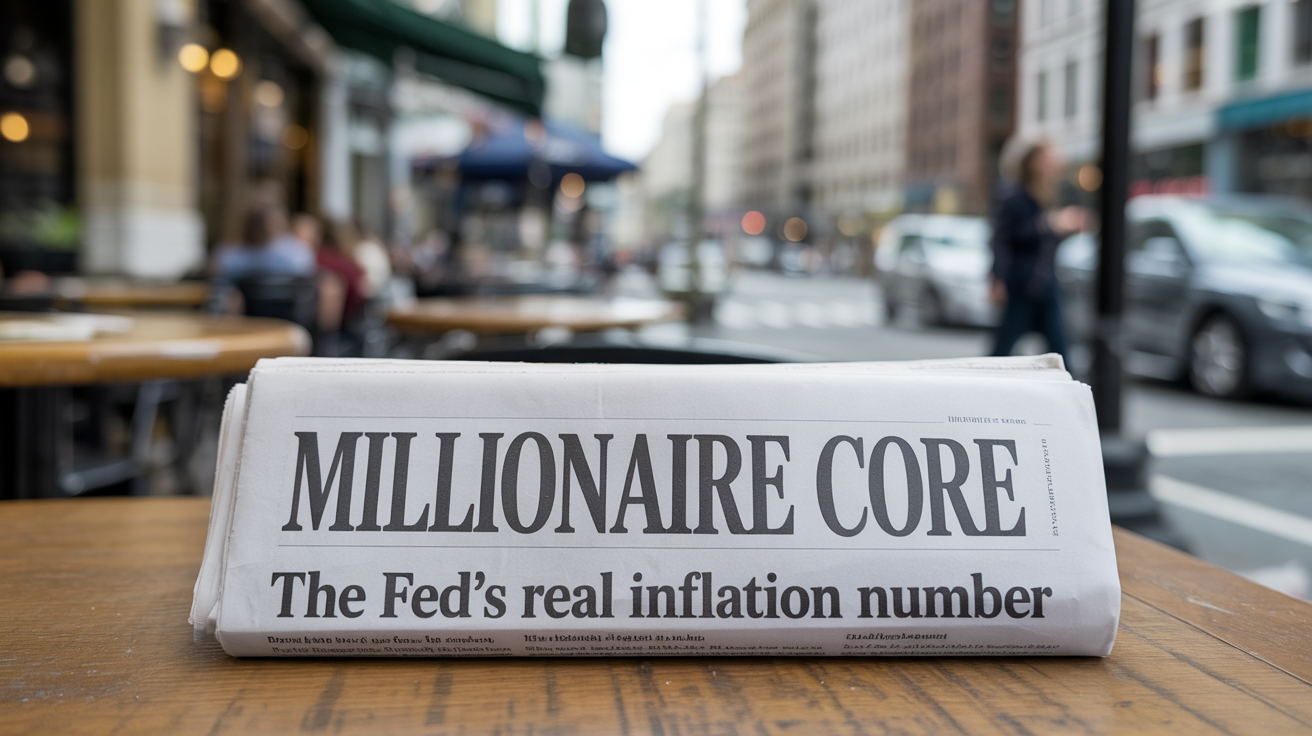
A key inflation report lands today, and it isn't the Consumer Price Index that usually dominates headlines. It's the Personal Consumption Expenditures index, or PCE, and it happens to be the number the Federal Reserve actually leans on most when deciding what to do with interest rates.
Sponsored by Altimetry
Trump Takes Emergency Action - Plus Elon Musk's New Venture
Dear Reader,
Without most people noticing, Elon Musk has started a new venture that has nothing to do with rockets, EVs, Neuralink, or tunnels.
Trump has personally issued emergency support to roll this underlying tech out as fast as possible.
It's already live in multiple states.
Behind the scenes, demand for this is already spiking...
The Financial Times says Sam Altman is begging people on the phone to build this for him and OpenAI.
And the best part for you and your wealth is:
A few little-known companies control the supply chain.
Anyone who wants this tech - be it Sam Altman or even Elon himself - must go through these companies to get it.
You can simply buy their stocks right now... before this news becomes common knowledge.
But you ought to move fast. Because leaked satellite images are already showing up online...
Click here to see how you could back Elon Musk's next venture from your regular brokerage account.
Regards,
Joel Litman
Chief Investment Officer, Altimetry
This ad is sent on behalf of Altimetry, 110 Cambridge Street, Cambridge, MA 02141. If you would like to optout from receiving offers from Altimetry please click here.
Why the Fed Prefers This One
The Fed has explicitly defined its inflation target, 2% over the long run, in terms of the PCE price index rather than the CPI. The two measures track similar territory but calculate it differently, PCE adjusts more dynamically for changes in what people actually buy as prices shift, while CPI uses a more fixed basket of goods. That difference means PCE tends to run a bit cooler than CPI over time, and it's part of why the Fed treats it as the more reliable read on underlying price pressure.
What's Riding on Today's Number
This report covers July data and arrives inside the same monthly release that also covers personal income, spending, and the saving rate, giving a fuller picture of household finances in one document. With markets already pricing in a high probability of a September rate cut following the Fed's recent signals, today's PCE reading is one of the last major data points that could either reinforce that expectation or complicate it before the Fed's next meeting.
Why This One Gets Less Attention Than It Deserves
CPI gets more headlines partly because it comes out a couple weeks earlier each month and partly because it's the number baked into things like Social Security cost-of-living adjustments, which gives it a more direct, visible connection to household budgets. PCE's influence is quieter but arguably more consequential, since it's the number actually steering the interest rate decisions that eventually filter down into mortgage rates, card rates, and savings account yields.
Final Take
You don't need to track PCE every month, but on a day when it's released, it's worth more attention than the usual economic data drop. If today's reading comes in hot, it could put a September rate cut in question despite the recent dovish signals from the Fed. If it comes in soft, it removes one of the last obstacles standing between here and actual relief on borrowing costs.
What really happened in Beijing? (Sponsored by Porter & Co.)
Wall Street quietly buying these stocks before November 3? (Sponsored by Brownstone Research)
This could be bigger than Tesla and SpaceX combined (Sponsored by Brownstone Research)
Written by Deniss Slinkins
Millionaire Core