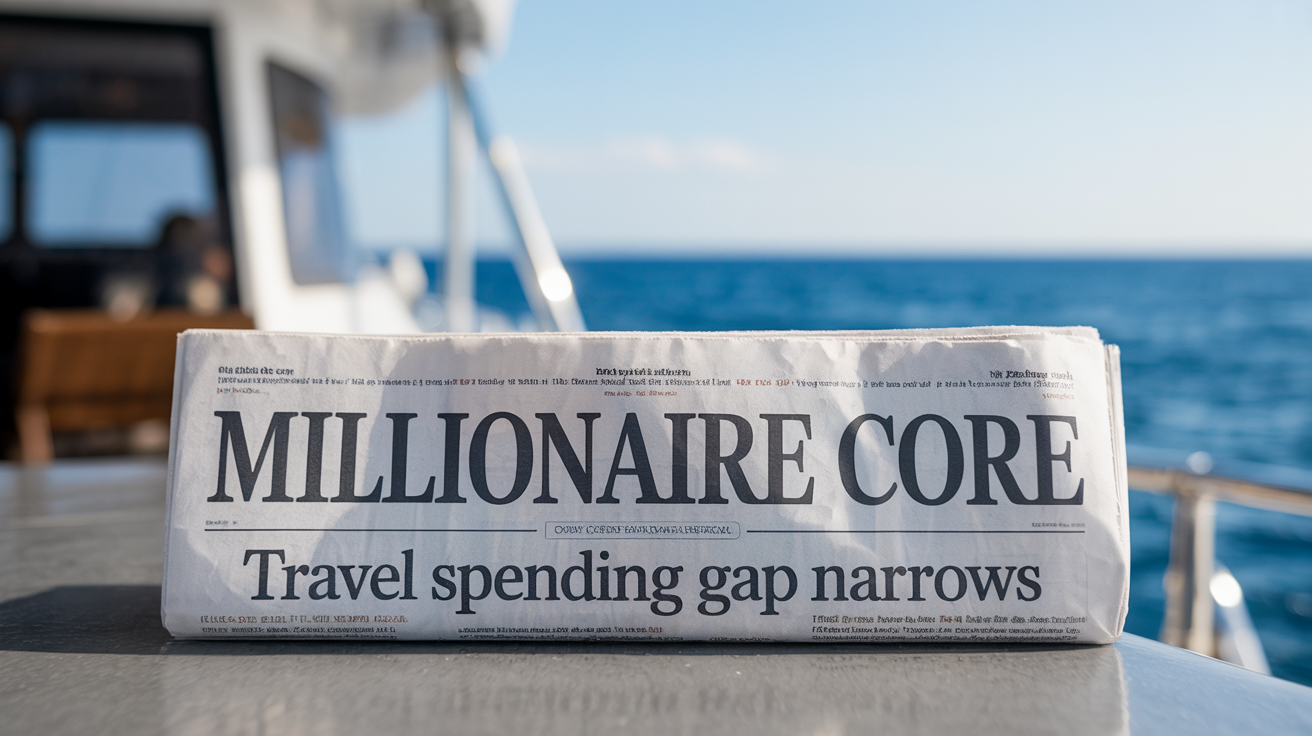
For the past couple of years, travel data has told a consistent story: higher-income households kept booking flights and hotels while everyone else pulled back, a pattern analysts nicknamed the "K-shaped" travel economy. Heading into this Labor Day weekend, there are early signs that gap is actually starting to close, and not entirely in the direction you'd expect.
Sponsored by Golden Portfolio
The $15 Billion Signal Washington Hoped You'd Miss
On April 16, two things happened on the same day.
The U.S. Treasury bought back $15 billion of its own debt — one of the largest single-day buybacks ever recorded.
And former Treasury Secretary Hank Paulson publicly warned about a collapse in demand for U.S. bonds.
That's not a coincidence. It's a signal.
When a government starts aggressively buying its own debt, it's telling you what the headlines won't: the market no longer wants it.
Here's why this is happening now.
For 50 years, a quiet 1974 arrangement between Washington and Riyadh gave America a captive buyer for every dollar it printed. On June 9, 2024, that arrangement expired.
The buyer base has been thinning ever since. And the debt coming due now has to be refinanced — while the natural buyers walk away.
That leaves the Fed as the buyer of last resort. Which means money printing on a scale that dwarfs 2008 and 2020.
When that happens, the dollar in your wallet becomes the release valve. And gold reprices.
But here's what most investors miss: the biggest gains won't come from bullion. They'll come from the miners still priced for a world that no longer exists.
[See the full briefing here]
Garrett Goggin, CFA, CMT
Lead Analyst and Founder, Golden Portfolio
P.S. The April 16 buyback barely made the news. But it may be the last clear warning before something cracks in the bond market. Go here before it does.
What "K-Shaped" Actually Means
Picture the letter K. One stroke angles up, the other angles down, both branching from the same starting point. That's been the travel economy for a while now, higher earners spending more on trips even as costs rose, while lower and middle-income households cut back on travel entirely. It's the same bifurcation that's shown up in broader consumer spending data all year, just applied specifically to vacations and getaways.
Why the Gap Is Narrowing Now
Part of the convergence is coming from an unexpected place: some premium travel categories are actually getting cheaper. International airfare is running about 4% below last year, and cruise pricing is down a similar amount. At the same time, domestic hotel prices are up 9% and popular destination airfare is up closer to 20%, which are the categories more accessible to a broader range of travelers. When the expensive stuff gets slightly cheaper and the everyday stuff gets more expensive, the gap between what different income groups are paying starts to close, just not necessarily because lower-income travel got easier.
A Convergence Worth Watching Carefully
This isn't necessarily a sign that budget-conscious travelers are suddenly flush with cash. Cruise ports are reportedly topping this year's Labor Day travel list, a category that has traditionally offered a relatively affordable way to pack in a vacation, and that could be part of what's pulling the numbers together from the middle rather than from the top pulling back.
Final Take
A narrowing gap in travel spending is worth watching as one more data point in the broader story of who's actually feeling comfortable spending money right now. Whether this holds beyond one holiday weekend or reverses once back-to-school and fall bills come due is the real question. For now, it's a small crack in a pattern that's held firm through most of this year, and worth watching into the fall travel season.
This could be bigger than Tesla and SpaceX combined (Sponsored by Brownstone Research)
5 stocks fighting America’s secret war (Sponsored by Porter & Co.)
Will you be left behind? (Sponsored by TradeSmith)
“My system said ‘SELL’ right before this stock tanked. Today, I’m shouting ‘BUY NOW’ before it soars.” (Sponsored by Chaikin Analytics)
Elon Musk's Potential $10 Trillion 'Dark Energy' Tech (Sponsored by Altimetry)
Act now before it’s too late (Sponsored by Omnia Research)
This metric called 1929, 1969 and 2000 [it's screaming now] (Sponsored by Golden Portfolio)
The AI Industry’s just issued a critical warning … (Sponsored by Weiss Ratings)
Live demo of Elon Musk’s 70X AI agent (Sponsored by Brownstone Research)
A gathering of crypto's architects (Sponsored by Boardwalk Flock)
Is This the Next $110B Coffee Giant (Sponsored by Green Coffee Company)
Written by Deniss Slinkins
Millionaire Core