
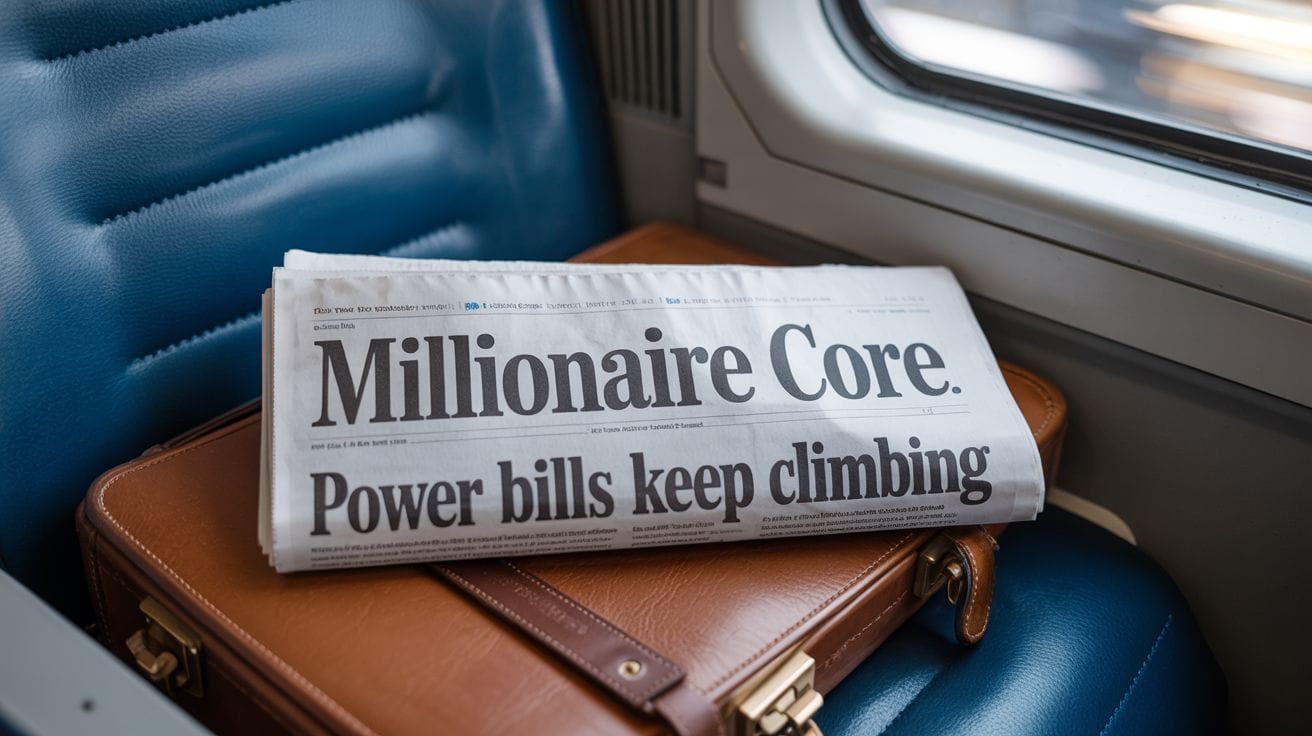
Overall consumer prices are running around 3.4%. Electricity rates rose 7.3% in the twelve months through April, and residential costs were projected to climb another 10.5% over the summer. That is the same economy producing both numbers. One of them shows up in a headline. The other shows up in an envelope every month.
Sponsored by Brownstone Research
OpenAI IPO Confirmed: Claim Your Stake Today
Editor’s Note: What if you could claim a stake in both OpenAI and Anthropic’s IPOs… with just $200? What if I said you don’t even have to wait for them to go public? Click here to see the details from former IPO insider Jason Bodner — the man who spent nearly two decades helping IPOs go-to-market.
Dear Reader,
Sam Altman and Anthropic CEO Dario Amodei just unlocked the biggest investment opportunity of the year.
OpenAI and Anthropic are about to go public in what Harvard refers to as “The AI IPO Tsunami.”
Fortune predicts they could create “a cascade of much-needed returns” for investors.
If you click here and learn what to do…
Some of that cash could end up in your pocket.
ATTENTION: There’s no need to wait for them to go public.
You can claim your stake today.
But hurry…
They’ve already filed the paperwork to go public…
And Reuters says they’re in an “ALL-OUT-WAR” to see who IPOs first…
Confirming that it’s going to happen very soon.
Sources say that Anthropic may go public as early as October 1.
That’s why I’m urging you to click here and learn how to claim your stake now.
Look, at the moment these are the two most anticipated IPOs.
Once they go public, for the first time ever…
Hundreds of millions of investors around the world…
Will have a chance to buy shares in the two biggest AI companies on the market.
I believe it’s going to be a frenzy like we’ve never seen before.
But you can get ahead of the crowd.
Just click here and I’ll show you how to get started.
Regards,
Jason Bodner
Founder, Outlier Alpha
The Number Utilities Are Asking For
In the first half of this year alone, utilities requested $18.6 billion in combined rate increases. For all of last year the figure was $29 billion. At the current pace this year will clear that comfortably.
Rate requests are not the same as rate approvals, and state regulators trim them. But the direction is the direction, and utilities do not file for increases they expect to be refused outright.
Why This One Is Different
Most of what drives inflation eventually cools. Grocery prices flatten, used cars come back down, airfares swing with the season. Electricity is not behaving that way, because the pressure is structural rather than cyclical.
Three things are pushing at once. Grid infrastructure that was built decades ago is being replaced at today's construction costs. Weather-related damage keeps forcing unplanned spending. And demand is rising for the first time in years, with data centers projected to account for as much as 15.3% of total US electricity consumption by 2030.
That last one matters for a reason that is easy to miss. A new industrial customer does not just buy power. It requires new generation and new transmission, and the cost of building that gets spread across everyone on the system.
The Part That Does Not Make the News
About one in six American households were behind on their utility bills earlier this year. The National Energy Assistance Directors Association estimates households could collectively owe $25 billion by year end.
This is not a story about people who cannot budget. It is a story about a fixed monthly cost that has been rising faster than wages for several years in a row, in a category where you cannot simply buy less. You can adjust the thermostat. You cannot stop running the refrigerator.
Final Take
Electricity is the household expense people are least likely to shop, because most assume there is nothing to shop. In much of the country that is no longer true. Roughly a dozen states have retail choice programs where the supply portion of the bill is competitive, even though the delivery portion is not.
Two things are worth checking this month. First, whether your state allows you to choose a supplier, and what the current offers look like against your default rate. Second, whether you qualify for the Low Income Home Energy Assistance Program, which has income limits considerably higher than most people assume and is badly underused.
Neither is exciting. Both are worth more than any headline about the inflation rate, because this is the bill that arrives whether or not the economy cooperates.
The Coffee Producer Riding 26X Growth (Sponsored by Green Coffee Company)
Enriched or impoverished? (Sponsored by Porter & Co.)
Use this AI breakthrough for the chance to make 1,000% (Sponsored by TradeSmith)
Blindsided if you’re too distracted to see what’s coming (Sponsored by Omnia Research)
A revolutionary new type of AI (Sponsored by Brownstone Research)
Silicon Valley homebuyers paying with IPO shares instead of cash (Sponsored by Weiss Ratings)
DO NOT invest in OpenAI and Anthropic’s IPOs (Sponsored by Omnia Research)
Meet the Wall Street Veterans Behind Colombia's #1 Coffee Producer (Sponsored by Green Coffee Company)
Written by Deniss Slinkins
Millionaire Core